
Transylvania County Criminal Court Records
A criminal court record in Transylvania County is the court case file kept by the Clerk of Superior Court after a charge is filed in the General Court of Justice. It may include the charging paper, warrant or citation history, indictment, appearances, plea entries, motions, hearing dates, orders, disposition, sentence, costs, fines, restitution, and probation terms. The full criminal case file is not the same thing as a booking record. Booking and custody details may start at the sheriff's Public Safety Way campus, while the court case record is kept through the clerk at the courthouse.
Transylvania County uses North Carolina's Superior Court and District Court divisions. Superior Court handles felony trials, major trial matters, and many appeals from District Court. District Court handles misdemeanors, infractions, traffic, first appearances, and other high-volume criminal matters. Magistrates serve within the District Court Division and are important for initial criminal process, warrants, and release conditions. The District Attorney for Prosecutorial District 42 prosecutes criminal cases, but the public court record itself is maintained by the clerk.
The District 42 prosecutor page identifies the district covering Henderson, Polk, and Transylvania counties. For indigent defense context, the NCIDS Transylvania County page lists Defender District 42 resources. These offices shape criminal case work, yet neither office replaces the clerk's role as the local court-record custodian.
NCIDS publishes Transylvania public-defense information for people who need appointed-counsel routing in criminal cases.
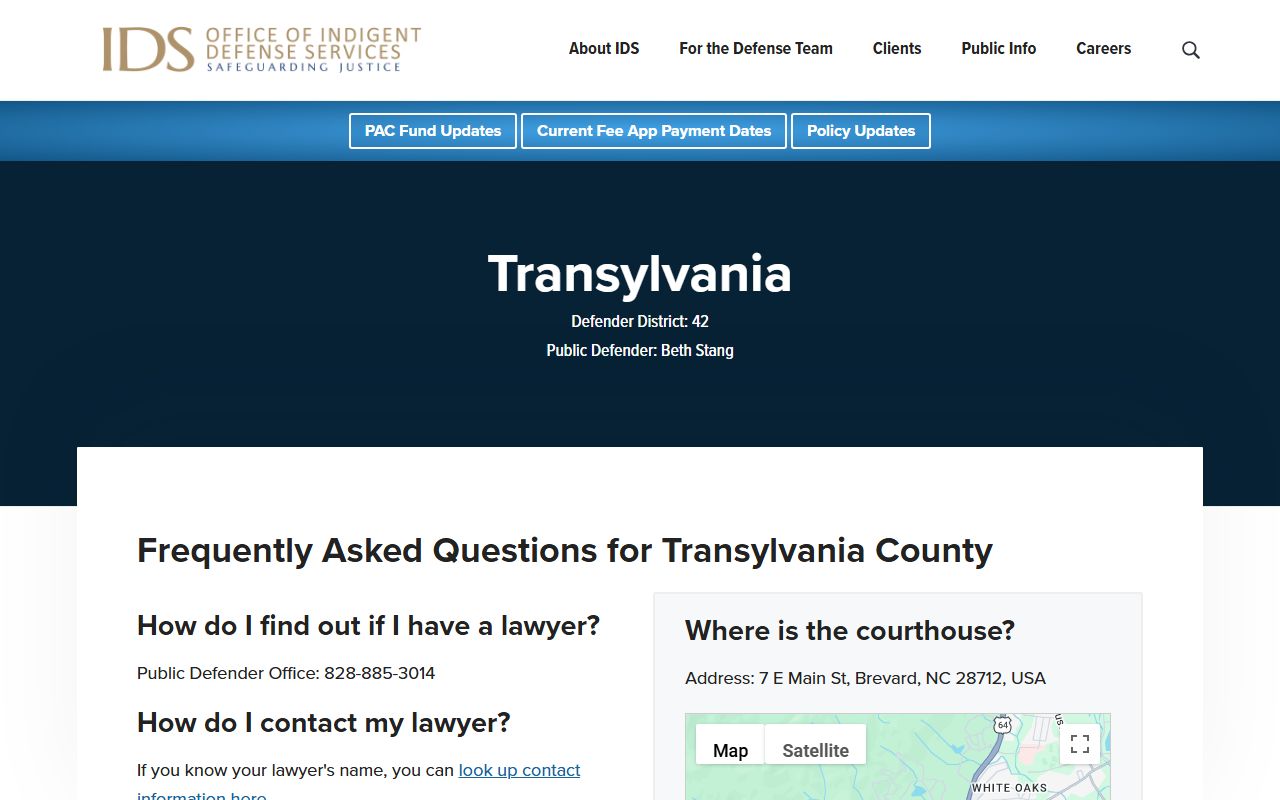
Defense contacts help explain who may appear in the case file, but the clerk remains the source for the public criminal court record.
Search Transylvania County Criminal Cases
The main online channel is the North Carolina eCourts Portal. NC Courts describes Portal as the public search path for case information, hearings, records, judgments, and eligible payments. Public users can search without registering. Registration may help frequent users save cases, but it does not unlock sealed, juvenile, or otherwise restricted criminal records. For copies, older files, background searches, and paper-file review, the researched route is still the Clerk of Superior Court.
- Open eCourts Portal and use Smart Search for broad Transylvania County criminal case information.
- Enter the case number if known, or search by name using last-name-first format from the official Portal training.
- Use filters such as location, case type, case status, party date of birth, or filing date range to narrow results.
- Open the case summary and register of actions to review events, hearings, dispositions, and financial entries.
- Call or visit the Clerk of Superior Court for certified copies, background searches, public terminal access, or questions about restricted files.
The Clerk of Superior Court is at 7 East Main Street, Brevard, NC 28712, and the researched phone number is (828) 885-3000. Criminal history checks should not be treated as a Portal-only task because NC Courts points background searches to the county clerk. Paper files and public terminals also matter when the online record is incomplete, old, sealed from public view, or too brief for the reader's purpose.
The District Attorney District 42 page identifies the prosecuting office that handles criminal charging and trial work for Transylvania County.
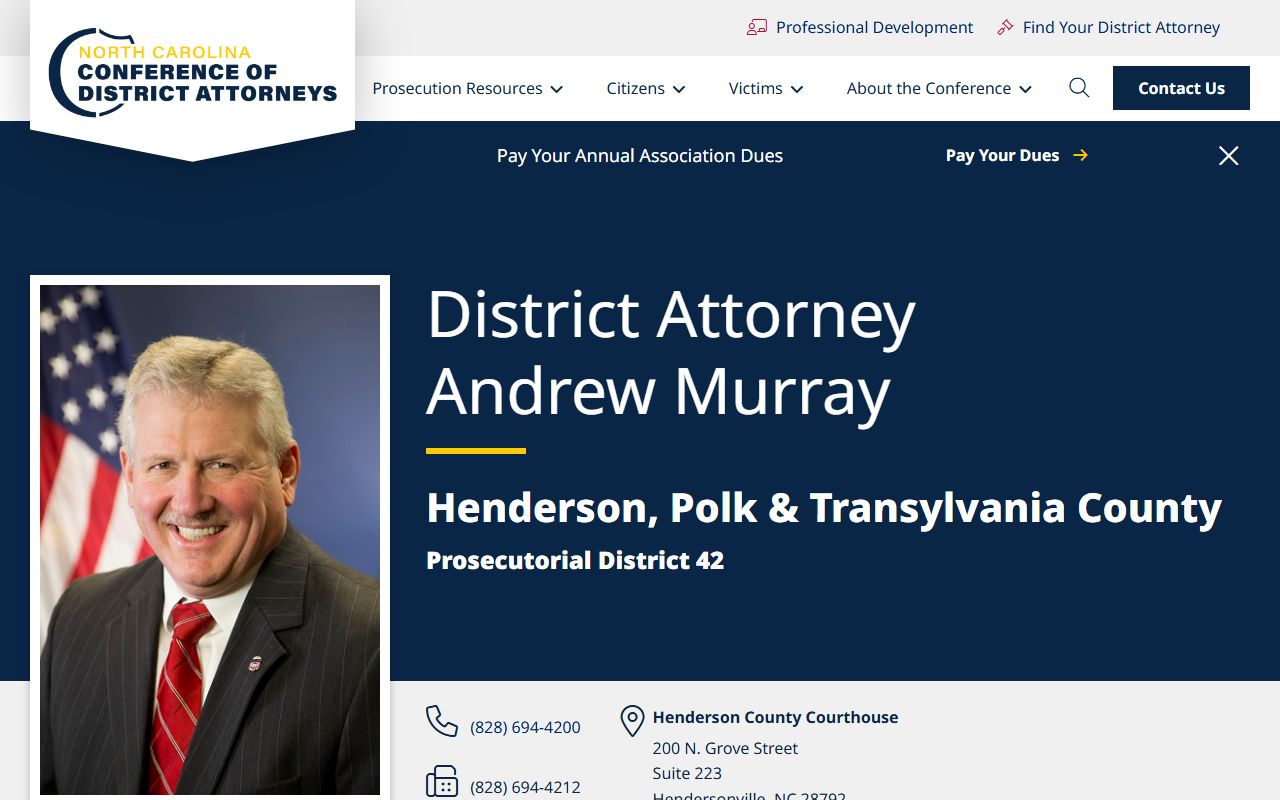
The prosecutor may amend, dismiss, or negotiate charges, while those actions become public court entries only when filed or entered in the case record.
Transylvania County Criminal Case Flow
A criminal case can begin with an arrest, citation, warrant, magistrate process, or prosecutor action. Felony cases may start with early District Court events and later move to Superior Court after indictment or another felony charging step. Misdemeanors and infractions usually remain in District Court unless appealed. The court record grows as each stage creates a filing, event, hearing, order, plea, judgment, or cost entry.
Case flow: Charges Filed › Arraignment › Pretrial and Motions › Plea or Trial › Disposition › Sentencing
| Stage | What the Criminal Court Record May Show |
|---|---|
| Charges Filed | Complaint, citation, warrant, indictment, information, statute, charge text, and agency or prosecutor details. |
| Arraignment | The charge is addressed in court and a plea may be entered or scheduled. |
| Pretrial and Motions | Continuances, discovery disputes, bond issues, suppression motions, or other orders may appear as docket events. |
| Plea or Trial | The record may show a guilty plea, not-guilty plea, bench trial, jury trial, verdict, or dismissal. |
| Disposition and Sentencing | The outcome, sentence, probation, costs, fines, restitution, and related financial information may be recorded. |
For a closer look at the arrest-to-charge pathway before final disposition, use the Transylvania County arrest records and court charges page. The full case file and sentence remain the focus here.
What Transylvania County Criminal Records Show
Official Portal training describes a case summary, register of actions, party information, case events, hearings, dispositions, and financial information. For Transylvania County criminal court records, the useful reading pattern is to match the charge list to the docket timeline, then read the disposition and sentence. Public date-of-birth display is limited, so an online name match may still need clerk confirmation when two people have similar names.
| Field | What It Shows |
|---|---|
| Case number | North Carolina Enterprise Justice format can show year, case type letters, sequence number, and county identifier. |
| Defendant | Name and public party details, with sensitive identifiers limited in public Portal views. |
| Charges | Charge description, statute or offense code, severity, and whether the charge was changed or dismissed. |
| Hearings | Dates, hearing type, location, and courtroom details when public. |
| Plea | Defendant response, such as guilty, not guilty, or another court-accepted plea entry. |
| Disposition | Outcome of the charge or case, including dismissal, conviction, acquittal, or other resolution. |
| Sentence | Judgment terms, probation, jail or prison sentence, fines, costs, restitution, and supervision terms when applicable. |
Portal may show a useful public summary, but the researched source inventory warns against treating it as the only record path. Copies, certified documents, and background searches go through the clerk. The Transylvania County court records page covers the broader case-record search process for civil, criminal, estates, judgments, and other court files.
Transylvania County Criminal Charges vs Convictions
A charge is an allegation filed by law enforcement, a prosecutor, a grand jury, or another authorized criminal process. A conviction is a final finding of guilt or responsibility. This distinction is central in Transylvania County criminal court records because a single case can list charges that were amended, reduced, dismissed, superseded, combined, or resolved differently from each other.
| Topic | Charge | Conviction |
|---|---|---|
| Meaning | Allegation filed in criminal process. | Final guilt or responsibility finding. |
| Where seen | Arrest paper, citation, indictment, complaint, criminal papers, or Portal charge details. | Disposition, judgment, sentence, and some downstream records. |
| Can change? | Yes. It can be amended, reduced, dismissed, or superseded. | Yes, but usually through appeal, court order, correction, or expunction. |
| Public meaning | Does not prove guilt. | Shows the court outcome unless sealed or expunged. |
| Local access | Portal, clerk, sheriff criminal papers, and jail roster for booking context. | Clerk record, Portal disposition, and background search through the clerk. |
G.S. 15A-146 is one expunction source for dismissed charges and findings of not guilty.
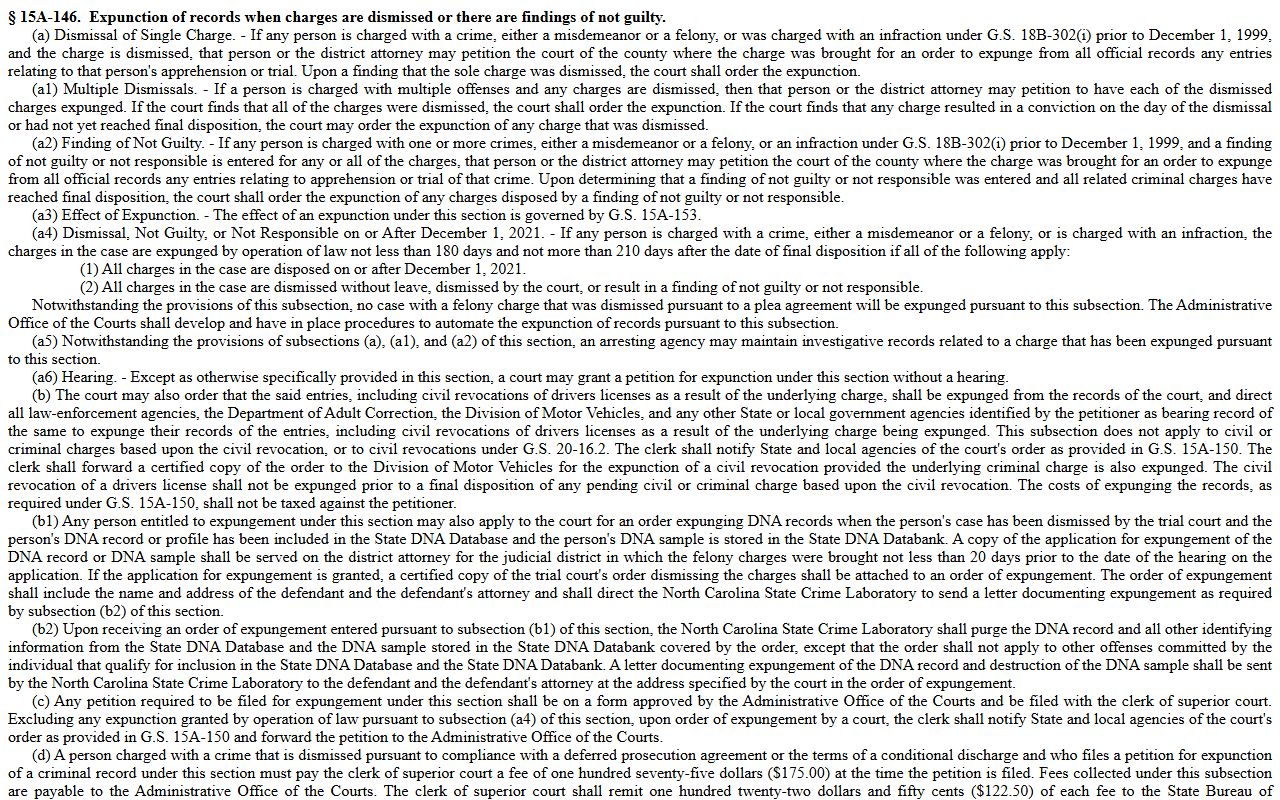
That statute matters because a dismissed Transylvania County charge may still be visible until an eligible expunction is granted and processed.
Restricted Transylvania County Criminal Records
North Carolina law restricts several criminal-adjacent record types. Juvenile delinquency and undisciplined records are not ordinary public files. Abuse, neglect, and dependency records are also withheld from public inspection unless an authorized rule or court order applies. Portal training says sealed and confidential records are not available to ordinary public users, and the research notes that unreturned criminal warrants may be restricted from public Portal access.
NC Courts describes expunctions as the process that can remove, seal, or destroy eligible arrest, charge, or conviction records.
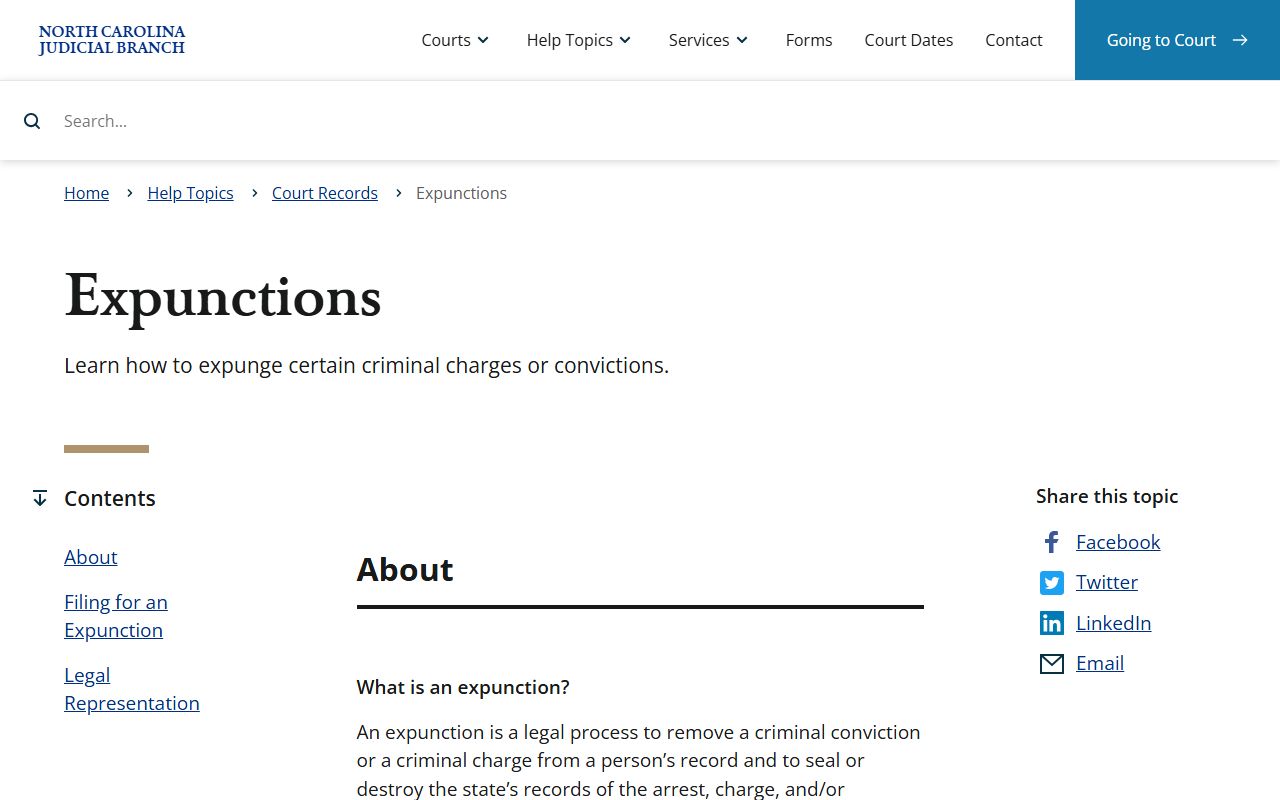
Expunction can affect what appears in public case search, but eligibility depends on the charge, outcome, prior record, waiting period, and statute.
Two statutes are especially relevant to public criminal case review. G.S. 15A-145.5 covers expunction of certain nonviolent misdemeanor and felony convictions when statutory requirements are met. G.S. 15A-153 explains the effect of an expunction on public records of arrest, charge, or conviction.
The nonviolent misdemeanor and felony expunction statute supplies one route for eligible criminal court records.
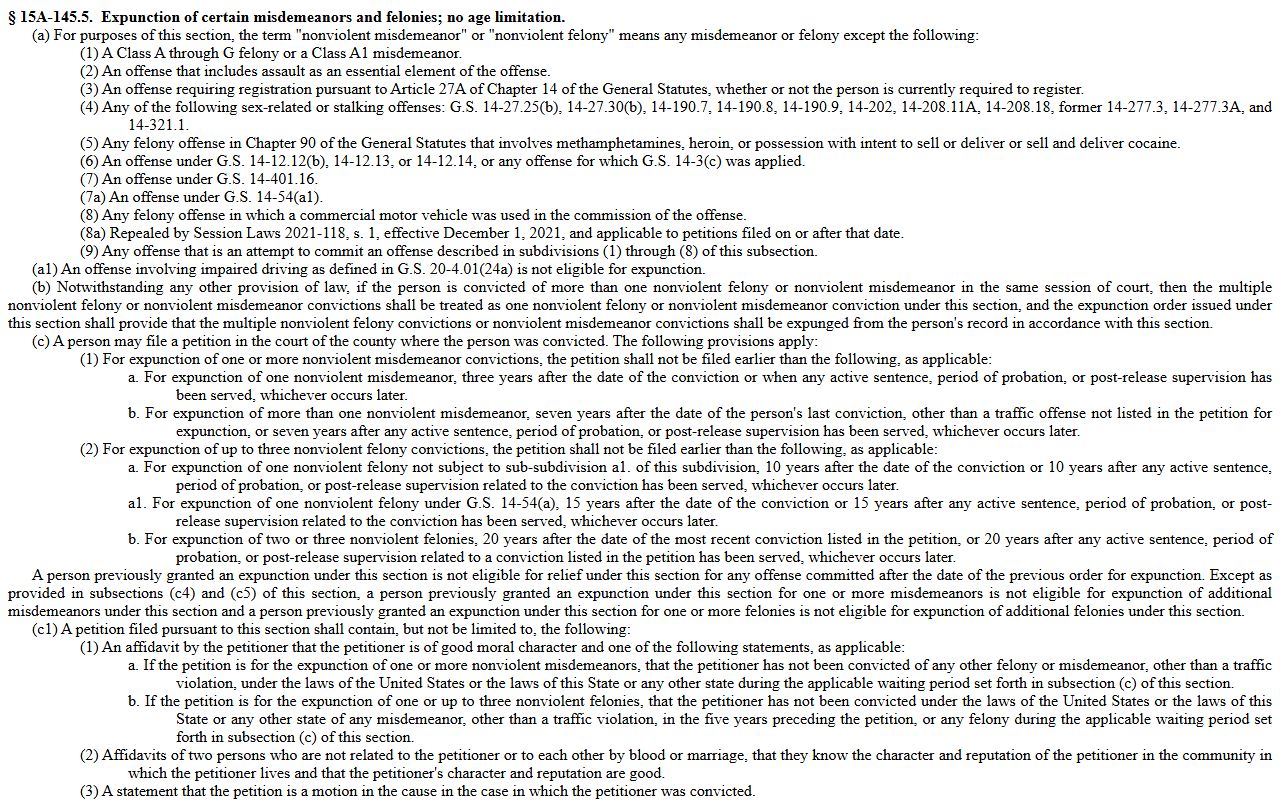
Its limits keep the page from treating all convictions the same, since statutory eligibility is narrow and fact-specific.
The effect-of-expunction statute explains why a cleared record no longer reads like an ordinary public criminal file.
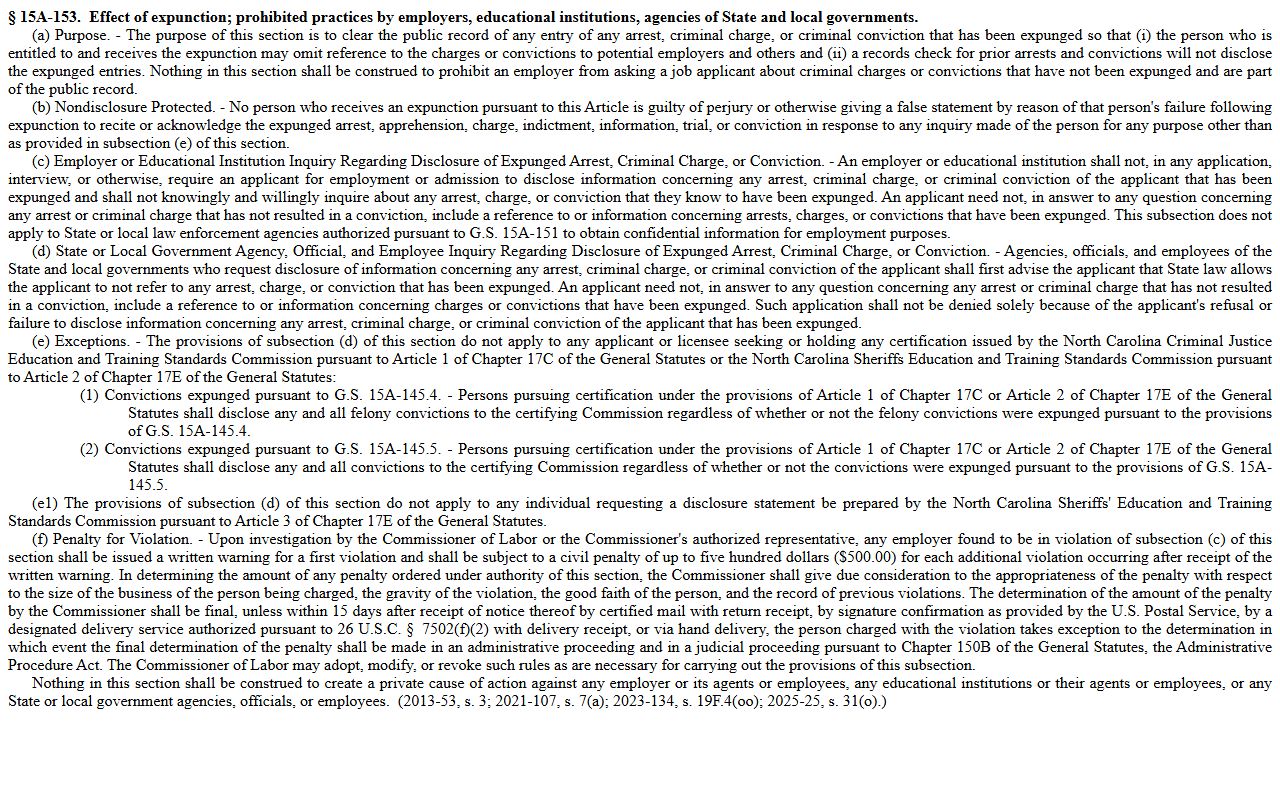
After an expunction order, public access can change even though confidential retained records may still exist under state law.
Sealed vs Expunged Criminal Records
Sealing and expunction are not the same. A sealed record is hidden from ordinary public access by statute or order. An expunged record is cleared under an expunction order, and North Carolina law treats the public arrest, charge, or conviction record differently after that order. Public Portal results should not be used as proof that a record never existed, because sealed and expunged records are designed not to display like ordinary cases.
| Topic | Sealed | Expunged |
|---|---|---|
| Public visibility | Hidden from ordinary public access. | Cleared from public arrest, charge, or conviction records after order entry. |
| Legal basis | Statute, case type, confidentiality rule, or court order. | Specific North Carolina expunction statute and court order. |
| Examples | Juvenile files, confidential special proceedings, unreturned warrants, sealed cases. | Eligible dismissed charges, not-guilty findings, or certain eligible convictions. |
| Where to ask | Clerk of Superior Court or counsel. | Clerk of Superior Court, NC Courts expunction forms, and counsel. |
Note: Public Portal absence is not proof that no Transylvania County criminal record, warrant, or restricted case exists.